GoTripAble does not sell holidays. It helps you check whether a destination is likely to suit your real-life needs before you book, including hills, heat, toilets, pram access, sensory load and walking distances. About GoTripAble →
Yes, Porto is hilly. Genuinely, significantly, sometimes-breathtakingly hilly. If you're travelling with a disability, chronic pain, joint problems, a wheelchair, a buggy, or simply ageing knees that don't forgive cobblestones anymore, that's the most important thing to know before you book. But here's the thing: Porto is also one of the most atmospheric cities in Europe, and with the right information, it is absolutely doable. This guide won't sell you a dream. It'll tell you what the terrain is actually like, where the flat bits are, which tools exist to help you get around, and how to make Porto work for your body.
So is Porto hilly? The honest answer
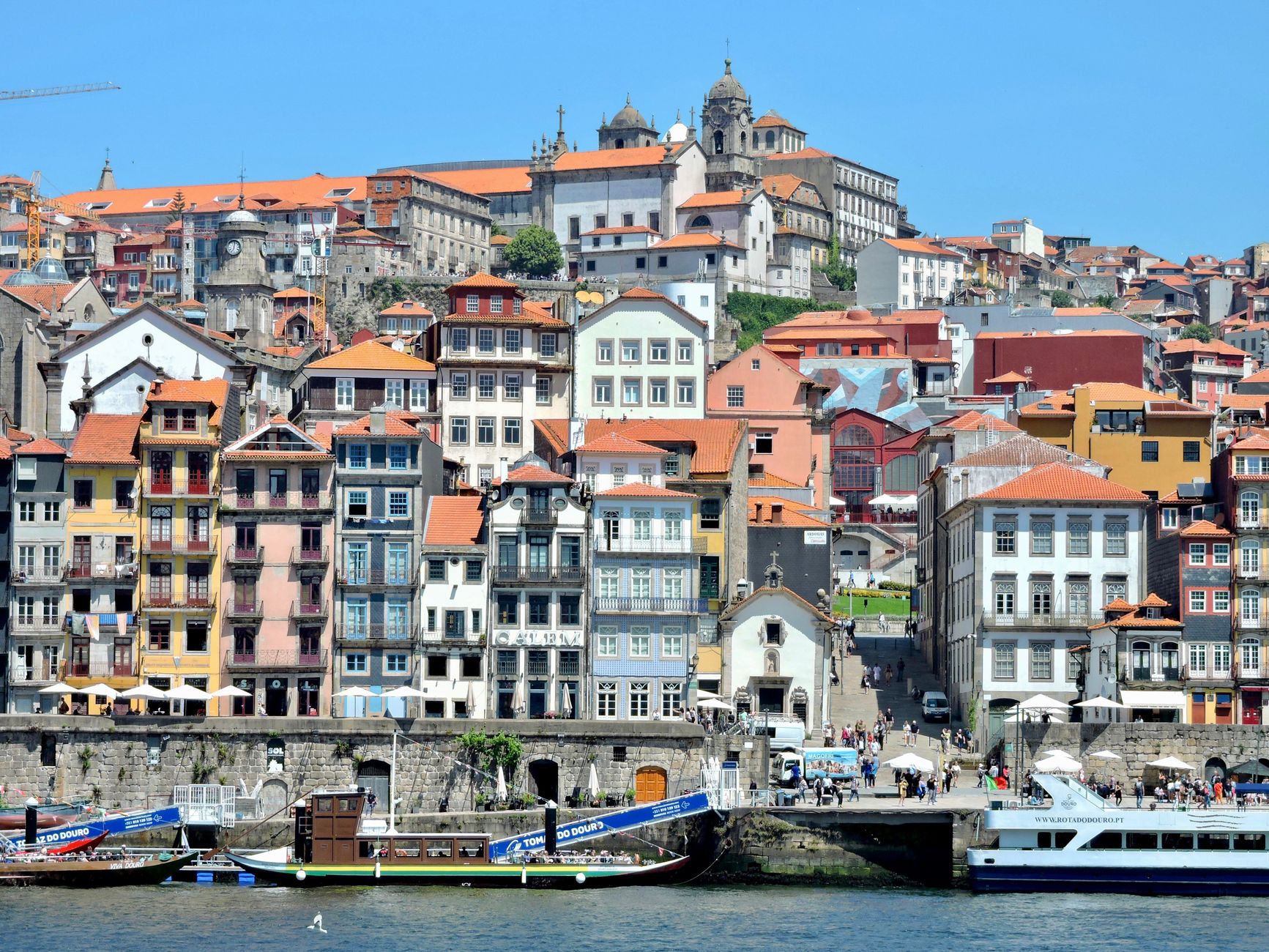
Porto is built on a series of steep granite hills that tumble down to the Douro river. If anything, Porto can feel even steeper than Lisbon in practice. Lisbon has broader pavements and long flat arterial roads in places. Porto's historic centre is more compact, more consistently hilly, and the streets are narrower. There are very few areas where you can walk for 20 minutes without encountering a significant incline.
What's flat in Porto-the riverfront and coastal areas
The Ribeira waterfront is largely flat once you're down there-the catch is getting down there involves a steep descent, either on foot through very steep cobbled streets, or by using the Funicular dos Guindais. Vila Nova de Gaia (south bank) is much more manageable at river level, with the accessible Teleférico de Gaia cable car connecting the upper area to the riverside. Foz do Douro (coastal neighbourhood at the river mouth) is significantly flatter than the historic centre-a smart base option for visitors with mobility needs.
The steepest areas to know about
- Historic Centre (UNESCO area): Many streets are essentially staircases with narrow cobbled paths alongside-not passable with a wheelchair
- The descent from Batalha Square to Ribeira: Very steep-the funicular exists precisely because of this
- Dom Luís I Bridge upper deck: Long, exposed, with some gradient-use the lower deck instead
Cobblestones in Porto-what to expect
Cobblestones are everywhere in the historic areas. On wet days, they become genuinely slippery-a real fall risk for anyone with balance issues or reduced foot sensation. Manual wheelchair users will almost certainly need a pusher on cobbled surfaces. Power wheelchair users should factor in significantly higher battery drain. Buggy users: expect to lift more than you'd like to.
Getting up and down-funicular, cable car and transport
- Funicular dos Guindais: Wheelchair accessible, connects Batalha Square to Ribeira waterfront-the most directly useful option for many visitors. Check current operating hours before planning around it.
- Teleférico de Gaia: Accessible cable car on the south bank, panoramic views, connects upper Gaia to the riverside
- Porto Metro: Smaller than Lisbon's but accessible in many stations-check individual station accessibility. Best for reaching the airport, Matosinhos beach, outer areas.
- Uber/Bolt/Taxis: Often the most practical way between areas for mobility-impaired visitors
- São Bento station: Ground level, accessible to view the famous azulejo tiles-no hills or stairs required
Porto for wheelchair users-honest verdict
Porto is one of the more challenging European cities for full-time wheelchair users. However: the Douro riverfront (via funicular or taxi) is accessible; Vila Nova de Gaia riverside and the cable car are manageable; Foz do Douro and coastal areas are significantly more accessible; Livraria Lello (the famous bookshop) has steps inside and is not wheelchair accessible. Manual chair users should travel with a confident pusher for anything beyond the flattest areas.
Porto with a buggy or pram
Porto with a buggy is hard work. Use the funicular to get down to Ribeira. Consider basing yourself in Foz do Douro for several days. A lightweight foldable buggy is significantly easier to manage. Baby carriers are genuinely useful for the times you want to explore steeper streets.
Porto beaches-accessible alternatives
Matosinhos, a short metro ride from the centre, is largely flat and has a proper Atlantic beach. Foz do Douro has seafront access and a coastal promenade. Both are far more manageable than the historic centre for anyone with mobility needs, and offer a genuine change of pace from the cobblestones.
Tips for making Porto work for you
- Base yourself in Foz do Douro if several days of comfortable daily living matters to you
- Use the funicular for the Ribeira descent-don't attempt it on foot if the steep cobbled descent would be a problem
- Use the Teleférico de Gaia for the riverside experience on the south bank
- Build your itinerary around the riverfront and Foz, with selective visits into the hilly centre
- Wear serious grip footwear-non-negotiable on wet cobblestones
- Check GoTripAble's full Porto destination profile for terrain ratings and condition-specific notes
Check this destination against your needs
Check Porto against your needs
Terrain, heat, toilet access and stamina ratings, tailored to your conditions. GoTripAble does not sell holidays.
Search 550+ destinations free
Find destinations matched to your conditions, wheelchair, IBS, heat intolerance, ME/CFS and more
Get 3 personalised destination ideas, £9.99
Tell us your needs and we'll hand-pick 3 destinations that genuinely suit you, delivered by email
Unlock condition-specific notes, £5.99/month
See exactly how your condition copes at every destination. Cancel any time.
GoTripAble Pro, free 2-month trial for travel professionals
Research destinations for clients with disabilities and chronic conditions. No card required.
Useful extras for your trip
Genuinely useful items for accessibility travellers. Affiliate disclosure: GoTripAble may earn a small commission if you buy via these links, at no extra cost to you. We only list items we'd actually recommend.
🎧 Sensory & noise
🌡️ Heat management
💺 Comfort & pain management
💧 Hydration
🧳 Organisation & packing
🦯 Walking aids & accessories
These are Amazon search links. Product availability and prices may vary. GoTripAble is not responsible for third-party product quality. Always check product reviews and suitability for your own needs.
Check this destination against your needs
GoTripAble has condition-specific ratings, terrain, heat, toilets, quiet areas, stamina demand and nearest A&E.
GoTripAble does not sell holidays, it helps you check suitability before you book.
Check this destination against your needs →Related guides
🍪 We use cookies, including Google Analytics and Microsoft Clarity, to understand how visitors use GoTripAble and improve the experience. We do not sell your data. You can choose to accept or decline non-essential cookies. Privacy Policy