GoTripAble does not sell holidays. It helps you check whether a destination is likely to suit your real-life needs before you book, including hills, heat, toilets, pram access, sensory load and walking distances. About GoTripAble →
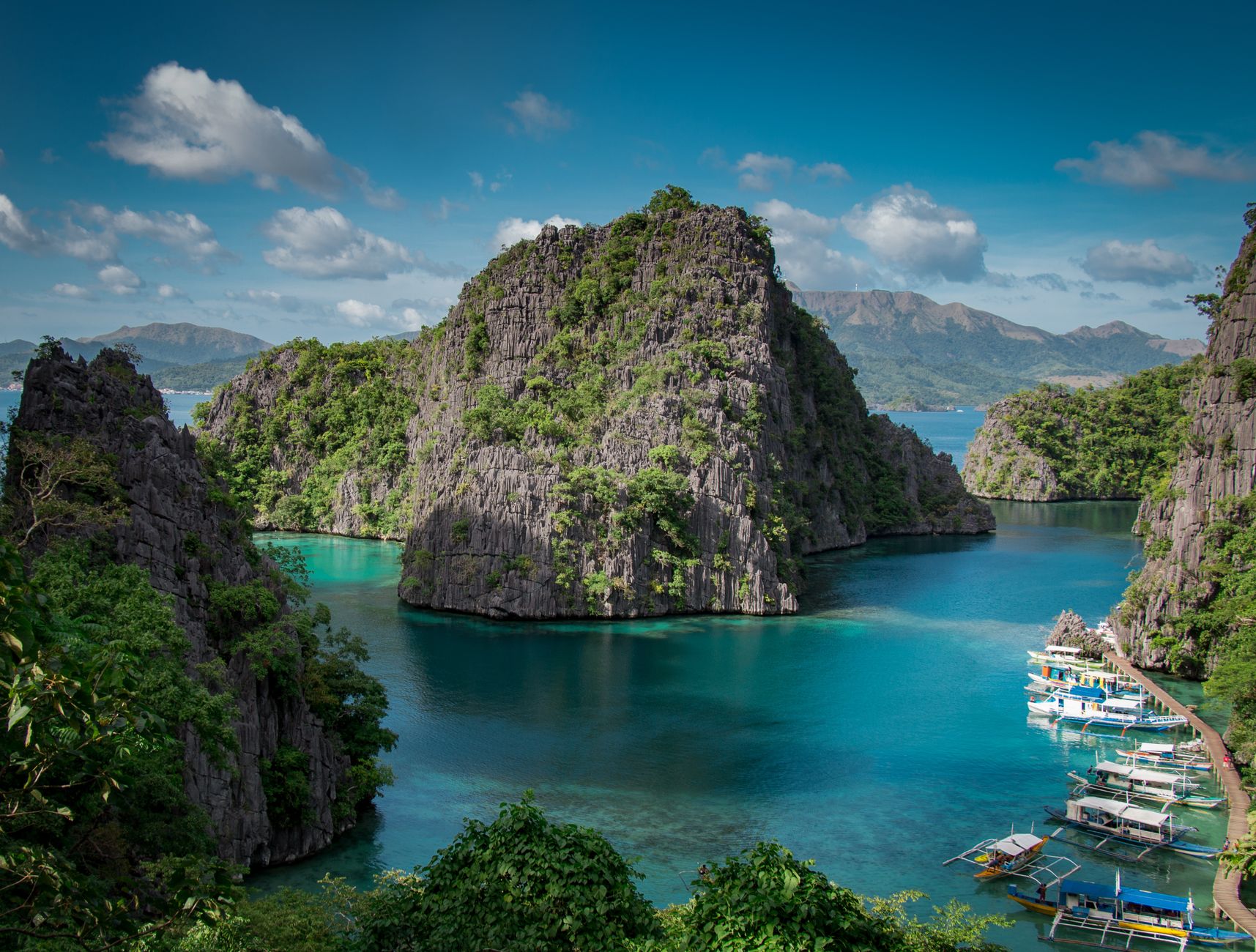
Palawan is regularly voted one of the most beautiful places on earth for good reason: limestone karsts, turquoise lagoons, white sand beaches. If you're a disabled traveller researching whether Palawan is suitable for you, the answer depends on your specific needs; for many wheelchair users, it simply isn't feasible at this time. This guide from GoTripAble provides an honest assessment. We will outline the real barriers, what is genuinely possible with good planning, and help you determine whether Palawan should be on your itinerary.
What makes Palawan challenging for disabled travellers
Palawan isn't designed with accessibility in mind. Key challenges include: boat-based transport is the default-island hopping by bangka (outrigger boats) requires stepping or wading through shallow water to board; infrastructure is limited-uneven roads, rare ramps, and variable accommodation; heat and humidity are relentless-28-35°C year-round with high humidity; no regulated beach accessibility-beach wheelchairs are not available at most locations.
Island hopping-can you do it with mobility needs?
Boarding a bangka involves wading out, grabbing the side, and hauling yourself up over the hull. For full-time wheelchair users: independent island hopping is not currently feasible. For ambulant disabled travellers: it may be possible with the right support-be upfront with tour operators before booking about what you can and can't do. Ask: how do passengers board? Is there a step or a wade? Can the boat moor closer to shore at stops?
El Nido-what's realistic
El Nido town is relatively flat. Beaches closest to town (like Corong-Corong) can be reached without a boat. Resort access varies significantly-always email directly to ask about access, and don't rely on booking platforms. Roads to outer beaches (like Nacpan Beach) have been mostly paved in recent years, although the final 1-2km near the beach may still be sandy/rough. For ambulant disabled travellers who can manage some uneven ground with rest breaks, El Nido town is manageable. For wheelchair users, the town centre is more navigable than many parts of Palawan, but access to beaches and activities remains quite limited.
Coron-what's realistic
Kayangan Lake: requires a steep climb up and back down a series of wooden stairs, which makes it inaccessible. It's beautiful, but be realistic before planning your trip around it. Coron town has flat sections and is somewhat easier to navigate on foot than El Nido. Maquinit Hot Springs may be reachable for some travellers-worth investigating directly.
Palawan and heat-what heat-sensitive travellers need to know
The temperature ranges from 28-35°C year-round, with consistently high humidity. For those with MS, lupus, autonomic dysfunction, heart conditions, fibromyalgia, and fatigue conditions, this is a serious planning consideration. Air conditioning is available in mid-range hotels and above, but once outside you will face full tropical heat. Island hopping tours typically run during the hottest part of the day. Early morning (before 10 am) is the most manageable time. Carry cooling tools-cooling towels, fans, and cooling vests-and don’t assume you will find them locally.
Hidden disability in Palawan-practical considerations
The Philippines has the Hidden Disabilities Sunflower scheme, which is recognised at major Philippine airports (NAIA Manila, Mactan-Cebu) and by Cebu Pacific airline. However, Filipino hospitality is warm-staff at resorts and on tour boats will often accommodate individual needs if you explain clearly and calmly. For those with anxiety and sensory sensitivities, El Nido can be busy during peak season-consider accommodation slightly outside the main strip or visit during the shoulder season.
When to visit-avoiding typhoon season
Dry season (November-May): This is the best time for Palawan. Enjoy calm seas, lower rainfall, and full island hopping operations. Wet/typhoon season (June-October): Rough seas frequently cancel island hopping tours, and some accommodations close. Avoid this season if possible, especially August and September when typhoon risk peaks.
Is Palawan worth it for disabled travellers?
For full-time wheelchair users: we cannot recommend Palawan as a primary holiday destination-the barriers are significant without specialist infrastructure. For ambulant disabled travellers with good upper body strength, reasonable stamina, and heat tolerance: Palawan can be a worthwhile choice with careful planning. For heat-sensitive conditions: the tropical climate is a significant challenge regardless of mobility status-be very honest with yourself about this.
Tips if you decide to go
- Contact tour operators directly before booking to discuss boarding arrangements.
- Book accommodation by email with specific access questions, not through platform filters.
- Travel in dry season (November-May) only.
- Build in significantly more rest time than you would at home.
- Pack all heat management tools-don’t rely on finding them locally.
- Check GoTripAble's Philippines destination profile for heat, terrain, and condition-specific notes.
Check this destination against your needs
Check Palawan against your needs
Terrain, heat, toilet access and stamina ratings, tailored to your conditions. GoTripAble does not sell holidays.
Search 550+ destinations free
Find destinations matched to your conditions, wheelchair, IBS, heat intolerance, ME/CFS and more
Get 3 personalised destination ideas, £9.99
Tell us your needs and we'll hand-pick 3 destinations that genuinely suit you, delivered by email
Unlock condition-specific notes, £5.99/month
See exactly how your condition copes at every destination. Cancel any time.
GoTripAble Pro, free 2-month trial for travel professionals
Research destinations for clients with disabilities and chronic conditions. No card required.
Useful extras for your trip
Genuinely useful items for accessibility travellers. Affiliate disclosure: GoTripAble may earn a small commission if you buy via these links, at no extra cost to you. We only list items we'd actually recommend.
🎧 Sensory & noise
🌡️ Heat management
💺 Comfort & pain management
💧 Hydration
🧳 Organisation & packing
🦯 Walking aids & accessories
These are Amazon search links. Product availability and prices may vary. GoTripAble is not responsible for third-party product quality. Always check product reviews and suitability for your own needs.
Check this destination against your needs
GoTripAble has condition-specific ratings, terrain, heat, toilets, quiet areas, stamina demand and nearest A&E.
GoTripAble does not sell holidays, it helps you check suitability before you book.
Check this destination against your needs →Related guides
🍪 We use cookies, including Google Analytics and Microsoft Clarity, to understand how visitors use GoTripAble and improve the experience. We do not sell your data. You can choose to accept or decline non-essential cookies. Privacy Policy