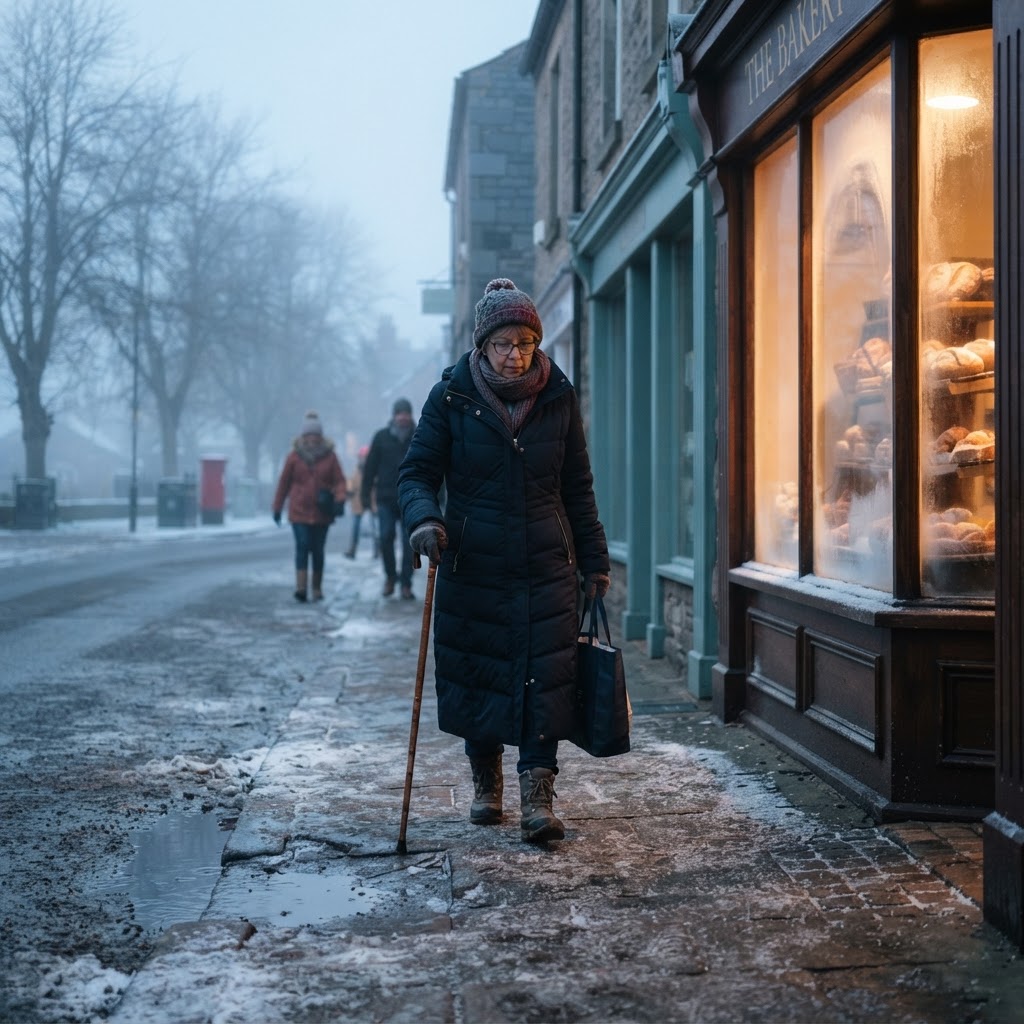
Will this winter be a cold one? Nobody can answer that in November, and anyone who says otherwise is selling something. What forecasters can do is watch a handful of slow moving patterns and say which way the odds have tipped. This year, as in most years, the one worth watching is the polar vortex. What follows is an honest account of what those patterns can and cannot tell you, what cold air does to a body that already works hard, and the things that make a cold snap easier: warmth you can afford, places you can sit, and a plan for ice.
A vortex story in the paper is a raised risk, not a date in the diary. Prepare for the cold snap you can actually control, not the one a headline promised.
What the polar vortex is, and what it can and cannot do to Britain
Every winter, high above the Arctic, a ring of strong winds forms in the stratosphere and spins around the pole. That ring is the polar vortex. It is not a storm and it does not arrive anywhere. While it holds strong and roughly circular it acts as a fence, keeping the coldest air up north where it bothers nobody's knees. Trouble begins when the fence sags.
When the vortex weakens, stretches or splits in two, air that would normally sit over Siberia or Greenland can slide south. Britain is badly placed for that: close enough to the continent to catch an easterly, surrounded by sea that is at its coldest in February, and small enough that a shift of a few hundred miles decides whether you get a crisp week or a fortnight of snow.
The usual trigger is sudden stratospheric warming, a phrase that sounds like relief and means the opposite. Thirty kilometres up, the air warms by tens of degrees over a few days, not because the Arctic has turned mild but because the vortex above it is being squeezed out of shape. Roughly two thirds of major warming events are followed by colder than average weather in northern Europe about two to three weeks later. That "roughly two thirds" is the part worth holding on to. It is a better signal than most of what reaches the front pages, and it is still short of a forecast.
February 2018 is the version people remember. An easterly pulled Siberian air across the country, snow closed schools and airports, and the papers named it the Beast from the East. It was a genuine and unusual spell, and it began with exactly this sequence: warming high above the Arctic, a vortex out of shape, and the winds at ground level changing a fortnight or so later. What it did not come with was a reliable warning a month in advance.
That is the honest state of the science. A weakened vortex raises the chance of cold weather in Britain. It does not deliver it. Some winters the cold ends up over Canada or central Europe instead. Some arrive as three sharp days rather than the six weeks a headline implies. A purple map of Britain in a story written in October is a possibility under discussion, not a season being announced.
The other pieces of the puzzle
El Niño and La Niña get blamed for British winters far more often than they earn. Both describe changes in the temperature of the tropical Pacific, thousands of miles away, and both do shift weather patterns across the globe. Over Britain the effect is modest and the record is mixed. El Niño winters here have been as likely to be mild and wet as cold, and the memorably cold December of 2009 happened during an El Niño. La Niña tilts the odds slightly towards a cold second half of winter, and slightly is the word.
The North Atlantic Oscillation does far more of the work and gets none of the attention, because the name has no drama in it. In its positive phase the jet stream runs fast and far north, dragging mild Atlantic air across us and giving us a wet, windy, forgettable winter. In its negative phase the jet weakens and buckles, the westerlies are blocked, and cold air finds a way in from the east or north. A buckled jet is behind most of the cold spells that actually reach the ground here, which is why forecasters watch the Atlantic more closely than the Pacific.
Put together, the honest summary is a sentence you will never see in a headline: the odds of a cold spell are close to normal in most winters, a little higher when the vortex weakens, and the specific week is unknowable more than ten days ahead.
What a cold snap does to a body that already works hard
Cold weather does not damage joints, and research on whether it worsens pain is genuinely mixed. What is not mixed is the physical experience of it. Soft tissue tightens, blood is redirected to the core, muscles around a painful joint work harder to protect it, and everything takes longer. That combination is why a cold snap can feel like a flare when nothing new is actually happening.
Stiffness, and the joints that predict the weather
Arthritis, old fractures, replaced hips and knees and hypermobile joints all tend to feel heavier on a cold morning. The pattern is real enough that most people with joint pain can name the day before a change, and the sensible response is unglamorous: warm up indoors before you go out, with a hot shower, some gentle movement and a layer you can take off once you are walking. Ten minutes of that changes the first hour of the day.
Hands, grip and the things that keep you upright
Blood vessels narrow to keep your core warm, which is why fingers go white, numb or aching, and why Raynaud's chooses winter to make its point. Numb hands are a safety issue when your grip on a stick, a crutch or a wheel rim is what keeps you upright. Mittens hold more warmth than gloves, cuffs over the wrist close the gap, and a rechargeable hand warmer in a pocket is the cheapest piece of equipment in this guide that reliably earns its place.
Tight muscles, spasms and multiple sclerosis
Heat gets all the attention in MS, but cold matters too. Tight, stiff muscles and spasms can increase when your body is working to stay warm, walking gets heavier and fatigue arrives earlier than usual. Some people find cold far easier than a humid August. The useful exercise is tracking your own pattern over a few weeks rather than assuming the season will go one way.
Breathing
Cold, dry air can tighten airways for people with asthma or COPD, especially on a day when you are walking briskly or hurrying for a bus. A scarf worn loosely over the mouth and nose warms and moistens the air before it reaches your chest. Follow your asthma action plan, keep the reliever in a coat pocket rather than a bag, and if cold air reliably triggers symptoms, talk to a pharmacist or your GP rather than giving up on going out.
Balance, ice and the fall that ends a fortnight
Winter injuries are rarely dramatic. They happen on a wet doorstep, a sloped path, one patch of ice in a car park, a ramp that looked clear from the car. Check the tread on your shoes and the rubber ferrules on sticks and crutches, replacing either when they go smooth. Take the gritted route even when it is longer. Take shorter steps. Take ice grips off at the door, holding on to something while you do it.
Wheelchairs, scooters and batteries that shrink
Battery range drops noticeably in the cold, so the same trip costs more charge in February than in June. Charge at room temperature, keep the chair indoors overnight where you can, avoid leaving a battery in a cold car or shed, and build in extra range on cold days. Metal thresholds, ramps and dropped kerbs freeze before the surrounding pavement does, and wet tyres grip less than dry ones.
Fatigue, mood and the shrinking day
Staying warm is work. Shivering uses energy, layers take longer to put on and take off, and a short outing costs more than it does in July. Add four o'clock dusk and it is easy to do less, sleep worse and feel flat, which is not a character failing. Fewer, better chosen outings usually beat a week crammed with things you will pay for afterwards.
This is pattern spotting, not diagnosis. If a symptom is new, one sided or worsening quickly, speak to your GP, a pharmacist or NHS 111 rather than putting it down to the weather.
Reading the forecast like someone who has to go outside
Rather than predicting the winter, the useful skill is reading the next five days properly, and three habits cover most of it.
Work from the forecast for the town you are actually going to, not the region in a headline, and use the hourly view rather than the day's single number. Dress for the feels like figure, which accounts for wind, and check wind speed and direction while you are there: a February easterly at 20mph cuts through far more than the temperature suggests. Read a weather warning for its time window rather than its colour. Amber ice from 3am to 10am is an instruction to move your outing to the afternoon, and ice that is treacherous at eight in the morning is often gone by eleven. The UK Health Security Agency also issues cold health alerts for England through the winter, and an amber one is a prompt to check heating, medication and travel plans that day rather than cancel the week.
A few patterns are worth recognising, because each changes what your feet will find:
- A cold, clear easterly. Dry underfoot, with the hardest ice at dawn and again after dark. Midday is your window.
- A mild, wet westerly. Warmer and, for many people, harder. Wet steps, greasy paving and a stick that will not hold.
- Snow, thaw, refreeze. The most dangerous sequence of the winter, because a path cleared at nine is glass by four, and dropped kerbs vanish under the plough line first.
- Storm or gale. Not cold, but disruptive: power cuts, cancelled transport, and branches across the pavement.
Warmth at home, without heating the street
Most of the difference between a cold snap you cope with and one you dread is made before it arrives, and very little of it is expensive.
- Heat the room you are in, not the house. Around 18C is the usual minimum for a room you are using, and warmer if you are older, unwell or sitting still. Closing doors does more than turning the thermostat up.
- Wear the warmth rather than buying it. A base layer, a fleece and a blanket work better than one heavy coat you cannot remove indoors.
- An electric throw is the most useful purchase of the winter. It warms you rather than the room, costs far less to run than central heating, and it is the reason a lot of people with limited mobility stop avoiding the sofa.
- Close the gaps. A draught excluder at the front door, a curtain over it, a rug over a bare floor.
- Hot water bottles: hot, not boiling. Replace them every couple of years, and never use one with a wheat bag in the same bed.
- Eat warm food you made on a better day. Soup, porridge and stews are cheap, and a freezer with a few portions in it means a flare up no longer means no dinner.
- Move a little, often. Three hours in a chair locks joints. Standing, marching on the spot or a few seated movements every hour keeps more than your hands warm.
- Keep the bedroom simple and safe. A torch within reach, a clear route to the bathroom, a warm layer at the end of the bed.
If the bill is the thing you are dreading
Check what you are entitled to now, while the weather is still mild. Cold Weather Payment in England and Wales pays around 25 pounds for each seven day period of very cold weather for people receiving certain benefits, and Scotland runs the Winter Heating Payment instead. Warm Home Discount is a one off reduction for eligible households. The Household Support Fund is administered by your council and can help with energy, food and essentials. The Priority Services Register is free for disabled, chronically ill and older energy and water customers, and gets you warning of planned outages and priority during cuts. Call 105 for power cuts in Great Britain, and keep a charged power bank and a torch within reach. Citizens Advice will check what you are owed and can talk to your supplier about a payment plan on your behalf.
Warm places that ask nothing of you
You do not need a flight to get out of the cold. Most towns have heated, step-free places where you can sit for an hour, and a warm hour out does as much for stiff joints as it does for a low mood. The ones below expect nothing from you, which matters more than it sounds when you are weighing up whether you can afford to be warm.
- Libraries. Heated, staffed, free toilets, usually step-free, with quiet corners. Many run winter warm space sessions with hot drinks.
- Museums and galleries. Most large UK museums are free, with benches in most rooms, lifts, accessible toilets and somewhere to hang a wet coat. Weekday mornings are the calmest.
- Warm hubs and warm spaces. Councils, churches and charities run free warm spaces through the winter, often with hot drinks and company and no booking. Your council website is the fastest route, and the Warm Welcome campaign keeps a map.
- Places of worship. Many open their doors in the day and run lunch clubs. You do not have to be a member to sit down.
- Shopping centres and food halls. Heated, flat, with lifts, toilets, seats and a hot drink for the price of a coffee. The whole outing can be indoors when the pavements are bad.
- Garden centres. Warmer than people expect, entirely step-free, with cafes and plenty of seating. Often the easiest winter outing with a wheelchair or a pram.
When you want a proper sit down and do not mind paying for it, cinemas give two hours of warmth for very little walking, with midweek daytime tickets cheapest and relaxed or autism friendly screenings at many chains. Leisure centres have spectator seating, warm viewing areas and cafes, some have hydrotherapy pools, and many areas offer discounted disabled rates with free entry for a carer. Daytime theatre matinees cost less than evenings and usually come with accessible seating and companion tickets, though it is worth ringing the box office rather than trusting the website. Supermarket cafes are not glamorous and they are useful: cheap, warm, step-free, and with a toilet you already know.
Five questions before you go, because a website promising accessibility sometimes means one accessible toilet upstairs. Is the entrance step-free and is there a drop-off? Is there seating in the rooms, not only in the cafe? Where is the accessible toilet, and is it open rather than locked or used for storage? When is it quiet? And will sitting down cost you anything? The first hour after opening, weekday mornings and the last hour before closing are reliably the calmest. Our UK attractions search lists step-free access, accessible toilets, seating and quiet areas for venues we have rated, and the days out hub has more.
If you would rather leave: winter sun, honestly priced
Winter sun is neither automatically expensive nor automatically cheap, and the date matters more than the destination. The first two weeks of January, midweek departures and late November are usually the cheapest windows, while the Canaries peak at February half term and over Christmas.
Tenerife, Lanzarote and Gran Canaria give the most reliable warmth within four hours, typically 20 to 22C in the south, and resorts such as Tenerife South, Lanzarote North and Puerto Rico in Gran Canaria have long flat promenades and plenty of adapted hotels. They are not the cheap option in high season, and they are the one least likely to disappoint.
Funchal in Madeira is mild rather than hot, around 18 to 20C, on an island of steep hills. The seafront and old town work well, and it suits people who want warmth without heat fatigue. It is not a beach holiday. The Algarve is usually the cheapest route to winter sun at around 15 to 17C, with the catch that many restaurants and attractions close in January and February. Quiet streets suit sensory needs and fail you if you need dinner nearby.
Paphos and Larnaca in Cyprus sit around 17 to 18C with good pavements and a long walking season, and January flights are often cheaper than the Canaries, though it is worth confirming your hotel is fully open. Valletta is compact and around 16 to 17C, with frequent buses and pavement cafes, but hilly, with steps in the older streets, so plan routes rather than wandering. Further out, Agadir in Morocco and Djerba in Tunisia are usually the cheapest warmth of all, around 20C, with longer transfers and a greater need to check FCDO advice, hospital distance and whether English speaking care is available. Cheap is only cheap if the access works.
Before you book
Four questions do most of the work. Ask whether the room is adapted or merely accessible, and get door widths, bathroom layout and whether the shower is level access in writing. Ask whether there is a pool hoist and whether it needs booking, because plenty of hotels have one and few advertise it. Ask how far the nearest hospital is and what an emergency would cost, which matters more than the star rating. And check that your insurance covers your existing conditions including a winter flare, with everything declared. Our before you book checklist covers the rest, and every rated destination shows terrain, toilet, heat and stamina scores, so you can judge the resort rather than the country.
A last word
A cold winter is a probability, not a prophecy, and the parts of it you can control are the parts that matter: the warmth you can reach, the hour you choose to go out, the rubber on the end of your stick, the number saved in your phone for the person who will bring milk. Whatever the vortex does in the end, most of that holds.
Reviewed November 2026. Seasonal detail changes, so treat the weather here as a starting point and check the Met Office forecast and your own condition specific guidance before making decisions.
